Halfway There: Thoughts and Stories from Days Seven to Nine on the Camino Portugués
These days on the Camino offered a blend of restful pauses and intense physical effort. I savored the slow pace and riverside charm of Ponte de Lima, tackled a steep ascent through vineyards and forests, and crossed into Spain’s historic town of Tui. Along the way, the trail grew busier and I discovered new reasons to reflect—both inwardly and alongside fellow pilgrims.
Day Seven: Ponte de Lima to Rubiães (17–18 km)
I really enjoyed taking a rest day in Ponte de Lima. I spent the day moving slowly, walking through its cobbled streets and tracing the edge of the river, while a soft breeze danced through the summer heat. Of all the places I’ve been so far on the Camino Portugués, this might be my favourite. It’s beautiful and calm, with a quiet rhythm that invites you to slow down and simply watch life unfold beside the water. Sunrise and sunset cast a golden light over the river, and it would be easy to stay here for days—lingering by the banks, letting time pass gently. If you can, I’d definitely recommend pausing here to savour and soak in the beauty of this place. There are plenty of water sports activities taking place along the riverbanks, alongside a range of beautiful public garden spaces to find delight in.
After leaving Ponte de Lima, I set off for Rubiães—a pretty challenging stage of the Camino Portugués, covering around 17.5 km. The day begins by crossing the town’s iconic medieval bridge, then winds through vineyards and along quiet riverside paths before climbing into the forest. The ascent to Alto da Portela Grande—the highest point on the Portuguese route—is steep, rocky, and rugged. I found myself pausing to rest several times in the heat of the day, but the views are worth the effort.
After reaching the summit, the trail gradually descends through pine woods and old Roman roads, eventually arriving in the peaceful and quiet village of Rubiães. Facilities here are limited, so I’d recommend packing a few snacks for the journey. This stage felt tough, and by the time I reached the albergue, I was dreaming of a big plate of salad and an early night.
My body is definitely becoming more vocal about what it wants and needs—and more than anything, I’m craving a full, uninterrupted night’s sleep. One thing the Camino does so well is highlight the quiet luxuries we so often take for granted: the privacy of your own home, soft bed linen, your favourite mug, family time. But that will make it all the sweeter for when I return—something reassuring to remember as I keep walking.
Day Eight: Rubiães to Valencia (19 to 20 km)
From Rubiães, you begin to feel the Camino growing slightly busier, as more pilgrims seem to be joining the path. The trail climbs gently at first, weaving through forest paths and rural lanes, before flattening out into a peaceful walk through farmland and stretches of ancient Roman road.
Arriving in Valença feels like a reward in itself. As you enter the historic fortress, you're surrounded by cobbled streets lined with cotton boutiques and shops specialising in home décor, tableware, and textiles—something I mentally noted for the future, if I ever wanted to pick up something for the house. I knew as soon as I arrived that I wanted to stay here for the night and take in the town’s old-world charm.
I stayed at the Bulwark Hostel, which is ideally located—close to restaurants, shops, and just a short walk from the Camino trail for an easy start the next morning. It was clean, and the staff were friendly and obliging.
That evening, I spent time with friends I’d met along the way. Over dinner at a small bistro in the town centre, we shared stories about our lives back home—opening up more than we expected to, simply because walking together makes space for honesty and openness. I was served a gin and tonic with a wildly generous pour of gin, which only added to the lightness of the evening.
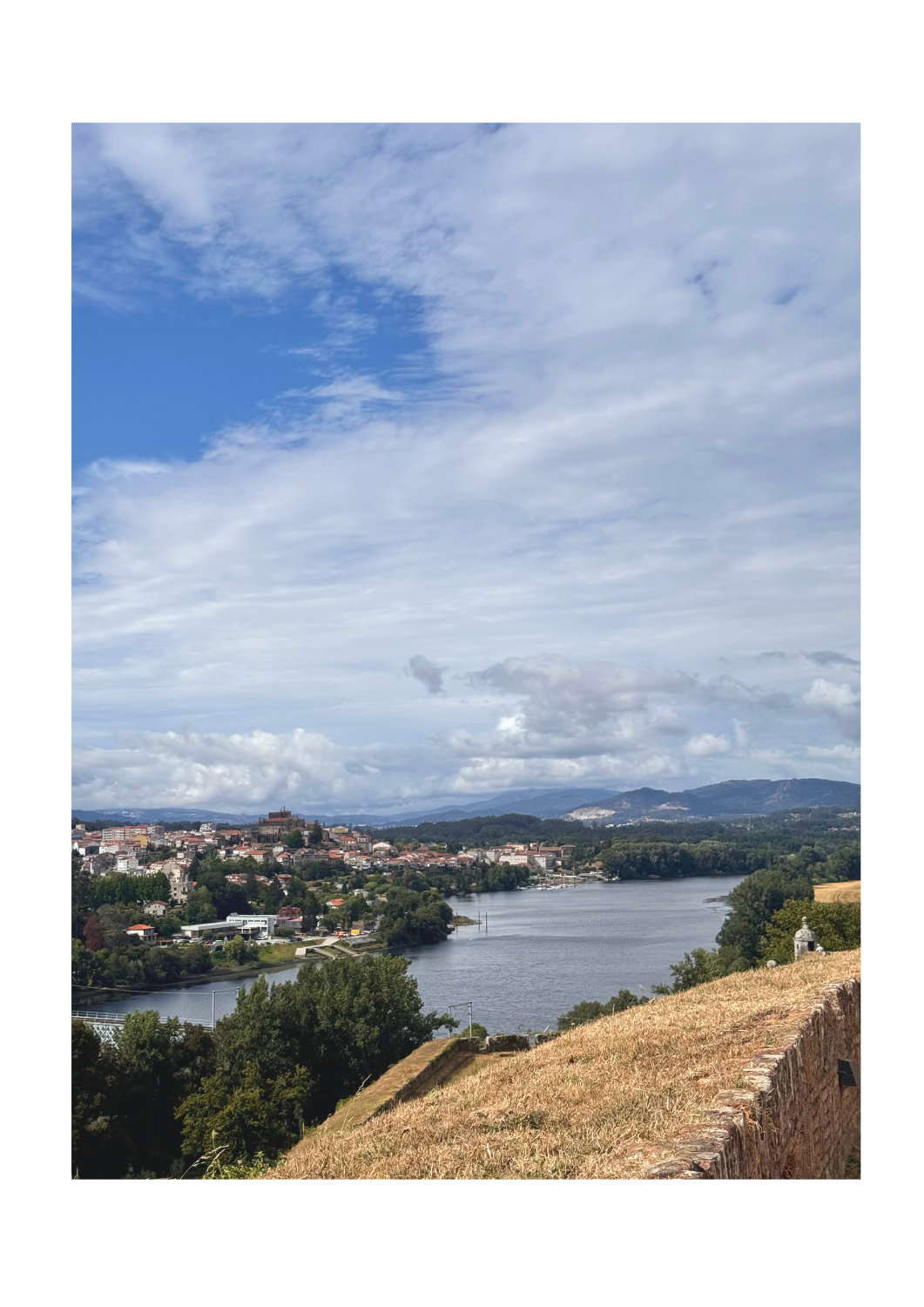
Afterwards, I wandered along the fortress walls alone. The views were breathtaking—rolling green hills, wide stretches of open countryside, and just across the Minho River, the town of Tui, with its old rooftops and ancient stone walls catching the days last light.
Tomorrow, I’ll cross into Spain. I’m excited—for the Spanish food, the warm hospitality, and knowing that with just over 100 km left to Santiago, my journey is starting to slowly draw to a close.
Day Nine: Valencia to O Porriño (19 km)
The walk from Valença to O Porriño begins with a beautiful bridge crossing into Spain—stepping off the bridge and into Tui feels like entering another world. The old town is full of winding stone streets and quiet, historic charm. I regretted not staying longer, but with a long walk ahead, I needed to keep moving. Since it was a Saturday, most of the shops were shut as I passed through—but Tui is definitely somewhere I hope to return to.
After weaving through Tui’s narrow alleys, past old churches and overgrown gardens, the trail opens into countryside and green space. A small café called Café/Bar Xardín is worth a stop—with its peaceful garden setting, simple menu, and generous selection of cakes. Nutella cake is a local favouite!
As you approach Porriño, the scenery becomes more industrial. The pavement can feel relentless on tired feet, but reaching the town feels like a gentle exhale. It’s wise to book your accommodation in advance here—Porriño is a common starting point for pilgrims aiming to complete the final 100 km required for the Compostela certificate in Santiago.
The Camino begins to shift in these final 100 kilometers. Accommodation becomes less certain, and the pilgrims who have already walked hundreds of kilometers carry with them a quieter, more introspective energy. The journey demands a simpler way of living—more basic, more communal, more reflective. For many, this stands in stark contrast to the hurried complexity of everyday life. Yet, for those who join the Camino just for this last stretch, the experience often feels lighter, more social, and celebratory—a different kind of joy altogether. Both rhythms are part of the Camino’s tapestry, each offering something deeply meaningful in its own way.
I’m currently considering whether to take the newer Spiritual Variant, which begins just after Pontevedra. This route is known for being quieter than the main path and passes by many fascinating religious sites and sacred spaces, offering a more contemplative experience. However, the terrain is more challenging. Though still fairly new, it provides a different option for those seeking a more peaceful and reflective end to their Camino.